Interview with Dr Peter Baker, University of Stirling. Text adapted and translated from the journal Ñawi, Vol. 7 No. 2, 2023, July. DOI:10.37785/nw.v7n2. See the original .pdf here. The text has been extended to include original interview material with the permission of the interviewee.
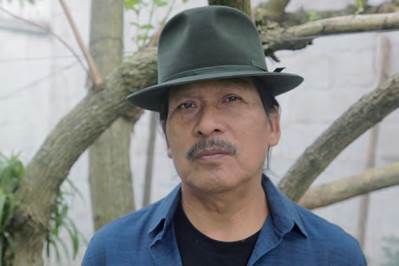
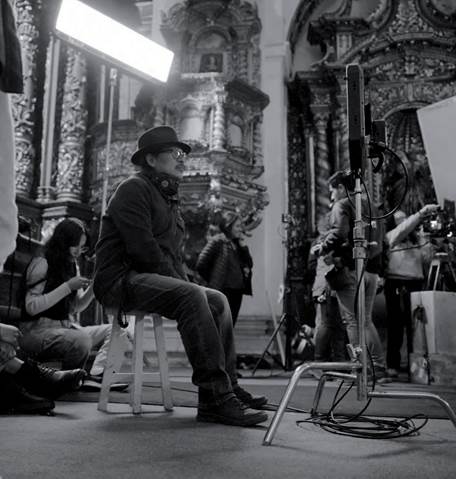
Alberto Muenala is a pioneer of Kichwa cinema and an important producer of Indigenous film throughout Abya Yala. He is the director of several documentary and fiction works, including the first Kichwa fiction feature film, Killa (2015). He is also general producer of RUPAI productions. In a series of interviews, which have been edited to be offered to readers of Ñawi magazine, Muenala shares the formative experiences that led him to become a filmmaker and community media activist. And he tells us how those experiences contributed significantly to the development of the cinema of the so-called “originary peoples” or First Nations (pueblos originarios) in Ecuador and other regions of the continent. Currently, together with RUPAI’s production team, he is involved in the process of shooting his second fiction feature film, entitled Corazón de la tierra/ Allpamamapak shunku (Heart of the Earth).
Alberto, why did you choose to study film? What was your understanding at that time of your connection with the Kichwa community?
I am a product of Kichwa Otavalo cultural movement which developed in the mid-1970s, where there were attempts at processes of decolonisation in art and in the construction and recovery of our own culture and creativity. In 1976, at the age of sixteen, a group of young people from the community of Peguche formed a student group. Feeling a degree of alienation due to our local monocultural education, we made the decision to engage in entertainment and cultural activities. We set up a small library, and we launched a campaign where we took out books from the universities in Quito. At the same time, we created a small music group. So our student group set up a library, and we also had this music group called Wayrawakamuju (sounds of the wind). A year later, when I was seventeen years old, with some members of this group and people from the community, we formed a group that had a kind of collective management. We didn’t have a director who organised the plays, but rather we built it collectively. The theatre group itself was formed as a response to needing to think about the problem that we were began to live in the community, and also in the communities around Otavalo, where some religious sects, especially the Mormons, began to penetrate our communities, creating internal, even family, divisions. So we said, well, we have to do something to stop this process that is dividing us. We put together a play that reflected on how, through the Catholic religion, the continent of Abya Yala was invaded, and how the Mormon sect continued to invade in an attempt to destroy our culture. So we put on a very interesting play, where we united the two stories: the historic one and the one we were living at the time. So it was very, very powerful, and it was very well received by the communities, because they were interested, they liked to see this kind of play that questioned these processes. And I hope, I think, I hope that at some point we have contributed to stopping that process…
This activity was quite rewarding, because at the end of the play we opened a discussion with the community, and we discussed the negative aspects of these missions, how they were affecting our cultural, social and family values. Thanks to this experience that we developed over about a year, I was invited to participate in the Peguche music and dance group, which was already highly recognised. At that time there was a mestizo director of the Peguche music group. I told her that I would join, but only if it was managed between us Kichwas, because I don’t think it would be useful for a process like ours to be directed by someone from outside. So they accepted my condition, and we began to coordinate this music and dance group between ourselves, as Kichwas. We had a very interesting process of dissemination. The Banco Central in Ecuador supported us, and we had a national tour in different cities. So it was quite an interesting process, making the music and dance of the Kichwa people of Imbabura known. Apart from that, I also worked within this group in the area of research and photography, and this experience stayed with me and encouraged me to continue with my cultural work.
I remember one day when we were doing field work, I went with another colleague to interview and learn about the music and dance of a taita (Kichwa leader or elder); I don’t remember his name. He was better known as Taita Viva la Patria. He was an elder. I think he was from the Morochos Community. He was very well known, because he was knowledgeable about the Kichwa cosmovision, and he was committed to the liberation struggle of oppressed peoples. This taita had a broad smile; it seemed almost like he was making fun of us when we approached him. We went there so that he could teach us. He had knowledge of the dance of the Abagos. And we were surprised when, in response, he told us: ‘that is easy to learn in practice’. That what we should learn was to maintain contact and harmony with the nature’s beings. He took us to the middle of his dirt courtyard surrounded by large wheat fields and other grains. He said: ‘Look, this is what you have to learn’. He concentrated on the middle of the courtyard. He said a few words very, very much to himself. And he added: ‘well, which way do you want the wind to come?’ And we, already very surprised, said to ourselves, hey, this taita is pulling our leg. We agreed with him, with this comrade, and we said ‘this way, from the east’. The taita concentrated, drank a little; he put his fingers between his lips. He whistled loudly, a high-pitched whistle that reached to I don’t know where. And suddenly he bent down. And with great respect, he waited. And we watched as the wind came through the wheat field, making ripples on the wheat. It came slowly and the wind was almost whistling… We were still very surprised. It passed by us, and this lasted about two minutes at most. And he laughed. He laughed at us. He said, ‘That’s what you have to learn. This connection with nature is what you have to learn’. The whole thing really marked me, really. It marked me a lot. I can say that theatre, dance, music and this taita helped me to look for another way forward. And that’s when my idea of studying film was born…
Because in the end I realised theatre, dance and everything we were doing was very limited. I thought there had to be another way. Well, I knew that cinema in Latin America was beginning to take off, and interesting things were being made. Even inspired by Italian neorealism, right? But it was a cinema that was starting to get closer to the people; they were starting to make films that were closer to our realities. And so I thought that the important thing at that time was to study film. And that’s how the idea was born of studying film at a film institute.
So what impact did both the production and reception of this cultural activism have on your way of viewing things?
Well, I think that all this contributed a lot, as an experience for me. In a way, our intention was to do cultural work. But this contact with the community, listening to their opinions, enriched us a lot, helped us to gain more strength and to work much harder, to look for more opportunities for exhibiting our work and make these plays visible. Because when we set up the theatre group, we didn’t think about taking it to the other communities. I don’t know, the play was our own idea because we were thinking about the community, especially in Peguche. But then we saw that had a good reception from different communities. Opening up the debates enriched us, and above all it gave us the strength to continue, because we saw that we were not on the wrong path…
We were critical, but we saw that people were also reconsidering certain issues. They were concerned about these intrusions of religious sects, and we were the alternative available to them to be able to question things. We didn’t have much power to prevent, or rather we didn’t have the power to prevent the sects from entering at all, because it was already an agreement with the state, but I think we made a contribution to questioning, analysing, reflecting and, well, the important thing is that I think that, even today, regardless of the fact that the sects have imposed their cultural and religious values, the Kichwa culture continues to flourish. You can see it in the raymis, especially in the Inti Raymi, where the majority of people, from the youngest age of two or three years old to the oldest, know how to dance it.
So how did you choose to leave for Mexico to study cinema? What did this experience mean for you?
Once I made the decision to study film, I looked for information about film schools. This was the time of military coups in Latin America, and I was informed that the film schools in Argentina and Chile were closed, and the only one left was the CUEC in Mexico (University Centre for the Study of Film). I worked for about two years as a mindalae (street vendor) in international commerce. I accumulated a small capital, and I went to Mexico to study film. Of course, also with my father’s support. The school played an important role; it was an important place to get to know the main currents of world cinema, and above all to learn the audiovisual language and knowledge of the world’s cinematographic avant-garde. You leave the school with valuable theoretical knowledge thanks to the quality of teachers like Juan Mora, Ayala Blanco, José Rovirosa, Ariel Zúñiga, Marcela Fernández, among others. But it is definitely on the job that you really learn how to narrate cinematographically. I learnt through participating in work for education on television, and in the documentary Juchitán, el lugar de las flores (Juchitán, the place of flowers), among other short films I made as a student.
In the third year of school I had the opportunity to work with students who were already graduating from their studies, and they invited me to film a documentary in Juchitán. Every weekend we would finish studying on Friday and go out to Juchitán. It’s in the south of Oaxaca, near Chiapas, about sixteen hours from Mexico City. We would travel all night, and on Saturday and Sunday we would work; on Monday we would return to study in the afternoon. This experience was very enriching for me, because I had the opportunity to film on the ground and with the experience of independent production, and above all of solidarity with a Zapotec people who were fighting for recognition of their own grassroots municipal authorities. This organisation was the COCEI, familiarly known as ‘the coalition’. This experience enriched my knowledge, and was the beginning of a commitment to filmmaking that fought for justice for human, identitarian and political causes. In the process, they were transformed into the rights of Indigenous peoples, in their struggle to achieve autonomy and self-determination.
What happened when you returned to Ecuador, after those studies?
When I arrived I found a country submerged in violence and state authoritarianism. Having family commitments, I had to look to get by, and at the same time take my life forward on the basis of family, ayllu and community. Thus, the need was born to create a collective dedicated to working on processes of contemporary needs. At that time, there was a struggle to develop processes of bilingual education, and we were fighting to begin audiovisual production from the Kichwa peoples and communities. When indigenismo reflected its clearest process of representation and ventriloquism in the different arts, representing the Indigenous peoples on their behalf, we felt that the Indigenous peoples themselves had no place in that process. So it was necessary to create an independent collective that would respond to the processes of those times. We believed that the time for lamenting and bowing our heads had to end, that we had the commitment to create another era with another projection that went against the grain of what was established, because we knew that formal and monocultural education, research and communication had the aim of continuing the process of assimilation and service to a model that was alien to the reality that we the Indigenous peoples lived….
As a reference we kept in mind that a year earlier one of the largest organisations representing Indigenous peoples had been created in Ecuador. In 1986, the CONAIE was created, which takes care of the political interests of the peoples. We thought that we had to support the national organisation from a micro level, to sustain it. In Peguche, in the community where I come from, we have a good number of professionals, men, women, cultural workers, artists, housewives and other acquaintances. And so we formed RUPAI.
At the beginning, there were about fifteen of us. We started working in three areas: research, education and communication. In research, we supported the teaching of Kichwa maths as part of a bilingual education process; we also contributed to the production of texts with graphic artists. We had colleagues who painted and they started to make texts with their drawings. As a result of the research on Kichwa stories, we started planning the production of the first short film, Yapallaq.
Tell me a little bit about this first short.
Yapallaq is the outcome of a research project on traditional tales and myths. After recovering several stories, we decided to choose this story for a film, because it maintained part of the process of the construction of Kichwa history, in which the character has a change of attitude and takes advantage of his position and satirizes the dominant religion. This change in the character’s attitude makes it possible to break with the myth of the sacredness of the Church. The attitude of the main character demystifies the belief that the Indigenous peoples were subjugated, he uncovers it, and we believed that, through oral stories, our grandparents had transmitted to us this rebelliousness and the deception of religious beliefs. It was important to us that the audience watching this short film would react and draw their own conclusions. In this way, we started to make a different kind of film, free of paternalism and invented images of Indigenous peoples. Above all, it was also about the need for a low-cost production, and that helped us a lot to be able to make this film.
What did you learn from the production of Yapallaq? What was its reception like, both inside and outside of Ecuador?
Yapallaq was the first Kichwa short fiction film. Well, a couple of indigenista film productions had been made before. I think Daquilema had been made, created by a mestizo filmmaker, depicting the story of this Kichwa-Puruhá warrior. But at no point is he given a voice. So there is already a process, a precedent, you could say, and I think there is another one out there, another short film. But what I can confirm is that it was the first short film directed by a Kichwa filmmaker. And the first short film in a comedy genre that departs from the costumbrista and anthropological model of some non-Indigenous filmmakers. So that’s the difference, because from this first work we are moving away from the works that had already been made with a more indigenista or anthropological theme. Well, this work offered a great learning opportunity in the different phases of production, dissemination and distribution. It allowed us to learn about the difficulties and benefits of this art. We learned about the colonial obstacles and prejudices that existed. As in the case of the premiere we held at the Gabriela Mistral Theatre here in Otavalo, where we filled the hall with Kichwa and mestizo audiences. At the end of the film we opened a space for audience participation, and in the midst of praise and interesting statements about the film, the rector of the Colegio de Otavalo, an older mestizo, approached the microphone and said that he had come only to see if it was true that an Indian had managed to beat the white people of Otavalo in producing a film first. I didn’t know how to take this gesture at the time. But these words that were meant to offend me caused me great pride, because it was true that it was the first film that was being made here, in the Province of Imbabura. And really in Ecuador, it was the first Kichwa film being made.
Yapallaq was invited to the second Indigenous Film Festival in Caracas, Venezuela, where it received a special mention. From then on it went its own way. It circulated through international festivals and exhibitions. At that time, Andean music was making its way to Europe, and without thinking too much about it, I ventured as a mindalae with this first production. I took the risk of leaving with this film to Europe, without knowing anything about distribution.
Labels in some cases become difficulties that enclose, classify, separate and can even standardise. That happened with Yapallaq, when they began to call it ‘Indigenous film’. In reality, I began making and continue to make Kichwa film, but in CLACPI festivals, or in some festivals in the United States, they call it ‘Indigenous film’, which would imply a continuity of indigenista cinema. But this corresponds to another era, another process and other interests, from which it was necessary to distance ourselves.
Later, my first contacts with other filmmakers were in the 1990s, when I travelled to Brazil for the third Indigenous Peoples’ Film Festival, and I met filmmakers and other film enthusiasts, all full of illusions, projects, and without a reference point that would allow us to build a production, or a coordination of local and continental work among ourselves. Now, looking back with a certain maturity, I think that in this first meeting of Indigenous filmmakers we missed a great opportunity to begin organising ourselves and create our own coordination, away from the indigenista structure of this festival. Well, maybe we paid for this naivety because of our lack of experience. Also, perhaps, because we were formed in a colonised and individualistic framework that affected our relationship with colleagues who had not studied film, but who were interested.
How did the experience you lived in Ecuador throughout those years influence the type of film that you decided to develop?
My commitment to filmmaking stems from experiences lived and experienced in Ecuador. The fact of being Kichwa has determined the conditions in which I have reached out to alterity. I experienced directly the repressive politics of the late 1970s. I remember that once we were demonstrating against the increase in fares on the Pan-American Highway near my community of Peguche. About twenty armed police officers got out of a police truck and unexpectedly chased us in order to stop us and thus put an end to our protest. More than 30 young people then entered the community. Some of us went into neighbouring fields planted with corn, and others went to the centre of the community. Some of us, who were a little late, entered the first house, half a block from the Panamericana, in the house of a community member who was with his family and his workers. They were having lunch. We were desperate; I think there were three of us, and when we saw that the looms were empty and everyone was having lunch, some of us sat down to pretend we were weaving, others sat down to eat. When the police came to arrest us, the head of the workshop justified to them that we were all workers. These and other early experiences formed my character, and my resistance to the social inequalities that we experienced.
The political situation of the 1990s definitely marked my path and my commitment to the Indigenous movement, which was consolidating itself as an alternative force with its own innovative proposals, opening up political spaces at the national level, exploring how to build a new model of a plurinational state, born out of the result of a long process of struggle against the colonial, neo-colonial and capitalist issue. It was interesting and a privilege to live through the process. I got to know first-hand the transformation that the Indigenous movement was bringing about and organising through the CONAIE, through young leaders of different nationalities. It was led by comrades who were proposing the economic, social and cultural transformation of the state.
This experience of the Indigenous movement had an impact on the country’s social, cultural and political activities in the 1990s, which began to work on the campaign for 500 years of Indigenous resistance. This translated into an awareness of identity, opening up a process of decolonisation of our official history. In addition, we were reflecting on the narrative of indigenista cinema and rethinking the role of that the audiovisual could play. We had to transcend that narrative that downplayed the peoples and nationalities of Ecuador. As Cristian León (historian and art critic) says, when he talks about cinema made by non-Indigenous people, it is a cinema that infantilises and desexualises Indigenous peoples. And that is why, since the end of the 1980s, in RUPAI we began to make another kind of cinema, making other realities visible, breaking neo-colonial schemes to create a new cinematographic language and thus show stories that were closer to the realities we were living.
That’s how we started to organise a cinema against the grain, as we called it at the time. We had to break away from mainstream cinema. We had to organise a cinema that would break with formal schemes, and above all that would recover our language, Kichwa.
After this, we could say that a new stage in the production of your film begins, what we could call a political turn. What takes place in terms of your political activism after 1991?
The 1990s can be summarised as the decade in which the Indigenous movement flourished, in that it won important national achievements in different governments, resorting to different strategies of struggle and public pressure to gain recognition. The organisations that emerged in these years held onto their autonomy and their own funds. Unfortunately, all these achievements changed significantly during the time of President Correa’s citizen’s revolution. The movement’s political organisations lost their autonomy or were transformed into state-dependent organisations. In this way, the achievements of the popular struggles of the 1990s were lost.
The political situation in the country at that time reflected the development of various Indigenous expressions in music and audio-visual production. Thanks to this juncture, audio-visual production by provincial organizations increased. In my particular case, the OPIP (Organization of Indigenous Peoples of Pastaza) proposed for me to document their march from the provinces to the capital whereby they hoped to achieve recognition of the territory for the Indigenous peoples and nations of the Amazon. The trust they placed in me created a bond of brotherhood and camaraderie, and they even appointed me as the official documentalist for the march. This gave me access to every detail of the event (and the obligation to cover it). From the moment we left the jungle communities, during days and days of walking, I felt the solidarity that the marchers had from the peoples of the highlands. I had the opportunity to participate in meetings which involve the state. These often ended in disagreements and tensions between state representatives and Indigenous leaders. During those days, the highest levels of power decided that no media outlets would be allowed to be present at the talks. Faced with this situation, the march coordination team demanded my presence at these meetings, arguing that I was part of the negotiating team and had the same right as the leaders to participate in the negotiations. This was how I came to be the only filmmaker who covered the entire march, and the results are in the documentary film Por la tierra, por la vida, levantémonos (For earth, for life, we stand), or, as we say in Kichwa, Allpamanta, kawsaymanta, jatarishun. That was the slogan that accompanied us throughout the march.
This documentary was filmed over fifty days, sometimes twenty-four hours a day, with ten days of preparation, twenty days of walking along the road from the communities of the Amazon, followed by another twenty days of uncertainty in El Ejido Park (in Quito), until the doors of the government and the Chamber of Deputies opened to hear the proposals of the Amazonian peoples and government authorities, in order to seek a solution to the issues and rights that gave rise to the march. The outcome had its ups and downs. The pressure exerted by more than 3,000 Indigenous representatives could not be ignored, nor was it easy for the government to dismiss it. On the other hand, I learned the power that a video camera could have, and all that this medium can achieve; every word, every action on both sides would become a historic moment, and at the same time serve as an element of the visual memory of that event from a testimonial point of view.
At that time, I had also written the script for Mashicuna. This story is the second short fiction film produced by the RUPAI team, inspired by the political effervescence and economic growth of a generation of Kichwa merchants. We felt the need to make this story even with limited financial and technical resources. We could say that it is the culmination of an independent production process in Kichwa cinema, which had no support and was recreating a new imaginary world and telling a story of inequality. To carry out this project, we drew on different realities specific to this system and the sociocultural conditions we were experiencing at the time. One of these was the lack of Kichwa actors. We improvised actors and part of the technical team, thanks to the solidarity and support in the province of Imbabura, with young actors and friends who played secondary roles. Juanita Parada was part of the production team. Under these circumstances, we managed to make a film that immediately achieved impressive results. It was selected for several festivals and subtitled in English for wide international distribution.
Based on this experience and the recognition we achieved, I began teaching screenwriting workshops. I was invited to replicate the Mashicuna experience. So I offered screenwriting, production, and filmmaking workshops in Colombia, Bolivia, Mexico, Guatemala, and Paraguay for young filmmakers from these communities — Indigenous filmmakers, that is. In this way, I shared the experience of low-cost production, but with a commitment to the reality of the image, the knowledge, feelings, and extraordinary cultural wealth of Indigenous peoples, thus affirming the commitment to share knowledge and experiences with new cadres who, in the near future, would give visibility to the diverse cultures and living conditions concealed by the coloniality of power. And hopefully, through images, awareness can be raised about the changes that are needed to achieve the goals of each community. That was my intention, the reason why I wanted to share my experience of fiction filmmaking. I started in Colombia, where I taught a workshop in 1992 for CRIC (Regional Indigenous Council of Cauca), with UNESCO. The filmmaker Marta Rodríguez was in charge.
What affect did these films, and the activism associated with them, have in Ecuador? Was there some lesson there concerning film as a political tool?
Well, films about Indigenous peoples and nations have been developing three decisive initiatives in their production process. First, productions started to be made that changed the image created of the Indigenous peoples by indigenista and commercial cinema. Second, they give a voice, freeing feelings and proposals in their own language. Third, they are breaking with the monocultural and uninational character of the country through creative proposals, the visibility of customs and traditions, colors, and symbols preserved in the communities, peoples, and nationalities of Ecuador. This exercise in audio-visual production leads to a process of decolonization in cinema and promotes the construction of a new plurinational and intercultural cinema. While it is true that Ecuadorian cinema was born with a film about Indigenous peoples, these peoples are represented from a colonialist perspective, and in some ways are portrayed to create a reality in which white mestizos predominate and which does not show the reality experienced by Indigenous peoples. Political cinema has been a weapon for raising awareness and knowledge of the unequal process experienced on this continent. Films such as La rebelión de Túpac Amaru marked a period of identity awareness in the 1990s, as did other films from that decade such as Habla la madre tierra, Mashikuna, and Por la vida, por la tierra, levantémonos, which became tools for debate, identity creation, and political activism, especially as they were viewed in communities, assemblies and community spaces.
I say this because, generally speaking, these films have not had, or did not have, or even now do not have, a space in movie theaters. In Ecuador there are no film clubs; there is nowhere to screen these films, so what we did was show them at assemblies and cultural events, and that is how they became known. We, for example, have participated with our films in the assemblies of the FICI (Federation of Kichwa Peoples of the Northern Highlands of Ecuador), which was a provincial organization, and when asked, we have also sent our films or gone to screen them at other organizations at the national level. Therefore, very little is known about the cinema of Indigenous peoples and nations in urban areas.
How did you find the experience of offering workshops to other Indigenous filmmakers in other countries from Abya Yala?
In 1992, I began training new videographers and communicators from different Indigenous peoples and nations at the international level. I worked with CRIC-UNESCO in a film workshop led by Marta Rodríguez called “The Use of Video in Indigenous Communities” to document their cultural recovery processes. My approach and contribution were in training videographers in the fiction genre. From 1996 to 1998, I collaborated in the training of Indigenous communicators in Bolivia. After completing these training workshops, and recognizing the commitment and interest in production and creation that existed among these new videographers, and above all considering the continuity and importance of audio-visual media, we decided to establish an organization of audio-visual producers called CAIB. It was the first attempt to decolonize and exercise autonomy and self-management in audio-visual production by the Indigenous peoples of Bolivia themselves. These audio-visual training experiences were also a learning experience for me, as they allowed me to develop, theorize, and put together methodologies that were adapted to the needs of these peoples. This experience allowed me to participate in other training workshops for videographers and communicators, as well as to make documentaries outside the country. Finally, I have taught courses at the Catholic University of Ibarra, the Central University of Ecuador, the Universidad de la Tierra in Mexico, and the San Antonio de los Baños Film School in Cuba.
How did the reception of your films in international festivals affect you?
My idea was to make films for the peoples and nations of Ecuador, especially to preserve the Kichwa language, because all my works, or most of them, are made in Kichwa, and I was committed to showing them to the peoples and nations of Ecuador, and if possible also in the two neighbouring countries. But once it started circulating at festivals, it was very interesting, because we began to participate with other works, with other film projects, and that made me think about putting together other kinds of stories, and I started to think about feature films. When I went to Amiens, in France, it was one of the few short films at the festival, because it’s a festival for feature-length fiction films. And that was important for me, being in those settings and starting to see other types of artistic works. So, yes, I went to several important festivals at that time, and my films began to circulate.
Through these festivals, I somehow reaffirmed my conviction to make films, to tell our stories. But through these festivals, what I saw was that it was very important to convey that other unknown history of the peoples and nations of this continent. I wanted to create a different kind of work, so I started writing a couple of scripts. Once, some Native Americans asked me to write a script about an Indigenous leader. Then, in 1992, when I went to Cuzco, I brought back a couple of books, and based on those, I started writing another script called Cuando los dioses eran neutrales (When the Gods Were Neutral). These were two scripts that recovered part of that memory, in which the peoples were resisting colonization. In other words, I believe it is a product of that international contact where you learn about other histories, and I see that it is also important to convey the experience of our peoples in those spaces.
In 1994, you worked in collaboration with the CONAIE in the organisation of the First Film Festival of the First Nations of Abya Yala in Ecuador. Can you tell me a little bit about that festival?
In 1994, we held the Abya Yala First Nations festival with a massive call for entries; I think we received more than 150 works. And suddenly, perhaps because of the experience I had had at some festivals, we took the films out of the big cities for the first time. Because before, they were held in the capitals of each country, or in the main cities. So we had a whole team that was deployed nationwide, and the first screening was held. This festival was held in the communities. That was the idea, to take the festival to the communities, and the delegates went to show their films. So they joined the CONAIE outreach team and we took them to different towns. I think there were about five outreach teams nationwide.
And how did it impact you to see what came out of the this space that you had all created? I imagine that you must have felt quite proud seeing the size of the event that you had managed to organise.
Well, more than make an impression on me, since I was so busy running around doing lots of things, what really touched my soul was how some guests, for example, someone from Colombia, said: “This has never happened in Colombia in my lifetime, nor will it ever happen, that we take over the Casa de la Cultura and dedicate an entire week solely to indigenous art.” Because it was a sector where white-mestizo culture supposedly predominated. And that shocked my colleagues. Because such a thing had never happened in Colombia, and we didn’t know if it could happen again… that we, the Indigenous people, would take over a Casa de Cultura in the heart of Quito, you know? So I hadn’t realized it, to be honest; I was just organizing things, I had to solve problems, but I didn’t have time to say, well, damn, I’m proud. No. I just liked that phrase, what they said, I mean, it has never happened and will never happen in Colombia, this is unique. And that was important. For example, other festivals were held anywhere else, but not at the Casa de Cultura.
That was what left an impression at the time, something that was being done for the first time. It was serious. I think it reflected the power we had as nations, as an Indigenous movement in those years. The power we had claimed to organize an event of that magnitude. In other words, I think it was something powerful, something big, that made all the guests proud. They felt empowered. And they said, no, we have to keep doing this and we have to keep reinforcing it. So I think those things contributed to more support for the Indigenous movement in the political arena. And it gave more identity, through these kinds of cultural events that had never been done before.
To conclude this interview, I would like to say that the work you do, and that of your colleagues at RUPAI, continues to break new ground and gain ground. Thank you very much for your time, dear Alberto, and for everything you have done to help us better understand the reality of peoples and nations of Abya Yala.