Segundo Fuérez is a Kichwa filmmaker and animator from the community of Yambiro. In his film production, he has always worked experimentally, mixing genres and creating an intimate working environment based on family ties. He graduated as a director of photography for film and television at INCINE after having already made several short films as a self-taught filmmaker. He participated in the film workshop organised by RUPAI in 2011 and was part of the Runacinema Laboratory and the technical team for the feature film Killa. He is currently the founder and director of RUNAnimation, a film and animation studio that, for 15 years, has been developing and creating processes for telling stories from relevant cultural communities through a combination of traditional and digital audiovisual techniques. In 2025, his first feature film, Puka Urpi (Red Bird), was released. In this interview, he talks about his vision of cinema and his career.
Portfolio: https://segundofuerez.wixsite.com/segundofuerez
Thanks for your time, Segundo. So tell me a little about how you decided to dedicate yourself to film.
I’ll try not to make this story too long. I think it started a long time ago. From my childhood. From necessity, from poverty. When I was a child, we didn’t have electricity and therefore never had a television. That’s why, when I saw a television for the first time at school, it took me so much by surprise that it had a huge impact on me. The teacher showed us an animated film about dinosaurs to explain the theory of the evolution of the universe. Seeing those drawings moving as if they had souls, talking and making you feel excited, and everything happening in that little box that lit up with colours. I wanted to get inside that box. I naively wondered how I could get in there. I think that magical encounter planted that curiosity, that question, in me. Over the years, it was like I was searching for that light through my sketches in my school notebooks, although I may not have been aware of that search. As a teenager, I began to do research on it on my own through the internet. I had just been taught how to use a computer at school, and the teacher taught us about the internet. Cyber cafés were just starting up, and I would spend some afternoons there. There was no free internet like there is now. All the information was in English, and I didn’t understand anything. I just looked at the few images that accompanied it. I forced myself to learn a few words little by little by reading information that came from abroad, from Hollywood. At the same time, my brother had bought a Handycam and was already filming weddings. He had tried to make a short film based on an oral story, and he included me in it. So we made a film together. I must have been 17 or 18 at the time. Back then, we were happy with the result, but looking at it now, it has too many mistakes, and I don’t know if you could even call it a film.
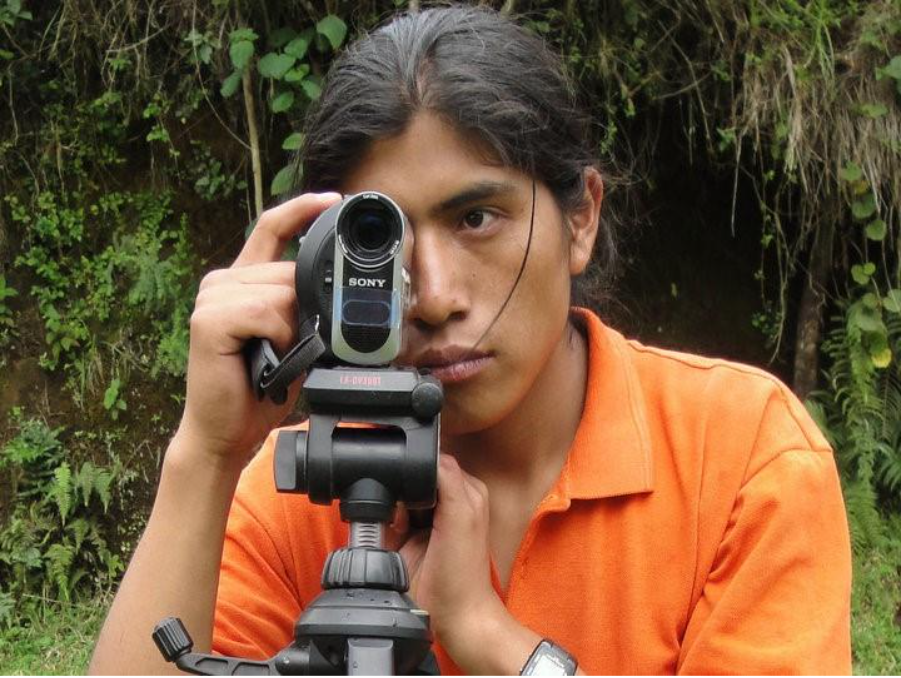
A photograph of me, at 17, on a day we were going up a mountain to film. Photo taken by my brother José Fuérez. Reproduced with the permission of Segundo Fuérez.
We did the work empirically: my brother filmed, our relatives and neighbours acted, and I wrote, directed and acted. Back then, we didn’t know about the different roles and departments in filmmaking.

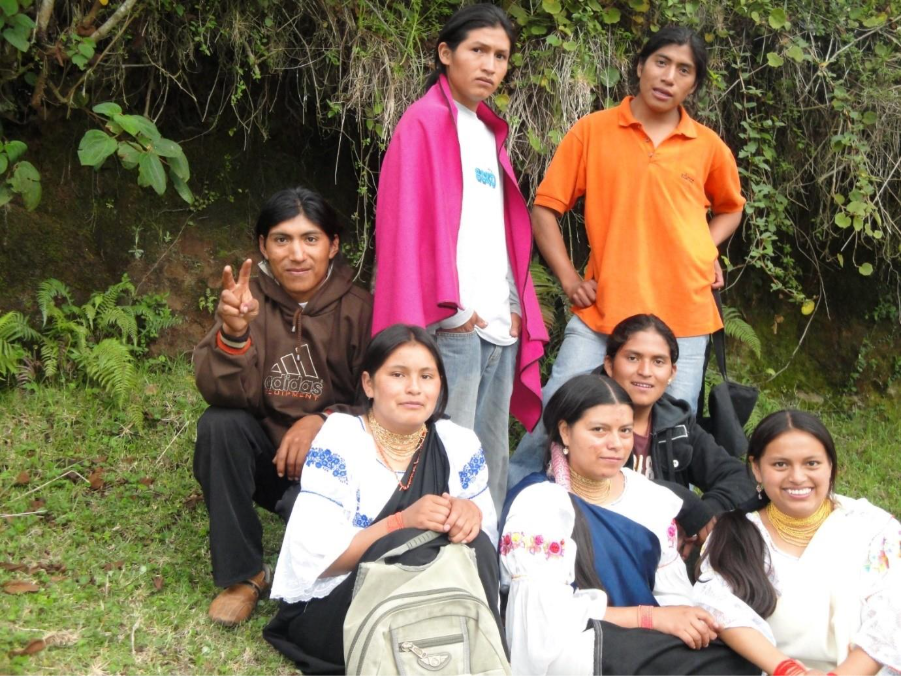
My brother José Fuérez (in the brown hoody) and the group that we filmed the first film with in 2007. Reproduced with the permission of Segundo Fuérez.
In 2008, when I was studying Business Administration, in a subject called marketing, we had to do an assignment on a social campaign. That’s when I came up with the idea of making an animated short film to raise awareness among people, young people and children. And so I created my first audiovisual work, a 2D animated film about a drop of water. This animation premiered in 2009 at several festivals and won awards. While all this was happening, in the same year, my mother passed away, and that had a profound effect on me. Longing to keep her stories, advice, and wisdom alive, I decided to pursue a career in film, and since then I have continued to weave together each audiovisual work as a fragment of my mother, trying to keep her alive in some way.
What an incredible story. So then, how did the idea of this first animation come about and how did its reception impact you?
Yes, well, at first, I didn’t have a clear understanding of the process, the workflow of filmmaking, of animation. I simply wanted to tell a story that would reach people. In that specific project, the idea was to create a campaign to raise awareness about saving and using drinking water wisely, so I invented the character of a water droplet that is born in the clouds and falls to the polluted, dry earth. I wanted to empathise and endear myself to the audience, to reach children. And so I started writing a kind of script. I didn’t know how to write a script, it was just ideas and notes and then sketches. I understand myself better through doodles. I’ve always worked directly by drawing the ideas, the shots I want to do. I feel that words don’t flow for me, I can’t explain myself, but I can scribble and scribble looking for an image.
Making of Yaku Wiki:
Ah, so you see it before you write it?
I visualise it, I visualise it over and over again, I imagine it a lot, I put together scenes or shots in my head. I found it very difficult to write it down in words. It was easier to draw how I wanted to see it than to explain it in words. Now I’m trying to learn the words. But not before. So that’s how it started, as a university assignment. But I couldn’t hand it in on time because it takes a long time to make an animation, and when they gave me the deadline for submitting the work, I only had the idea and some sketches of the character and settings, but then I continued working on my own and finished the short film, which is about 10 minutes long.
Link to the short: https://youtu.be/LdBuipdALSA?si=q9uqPXrwSMAWwnZA
So that was a lesson for you as well, I imagine?
It was entirely self-taught. I spent my time watching, searching for information, reading, wondering how they did it. I knew nothing about animation programmes, video editors, nothing, nothing, nothing, but I spent my time researching, completely self-taught. I didn’t even have a computer. And once, while I was studying, I tried to ask someone for computers, and little by little I was working, and that’s why I think it took me a few months or even years to finish that short film. Little by little. And then I heard about a festival. I didn’t know how to premiere it, so I did some research and found out that there was a festival here in Ecuador. And I said, let’s try it. I entered it. And they replied that they had accepted it. I didn’t know what could happen, and then they invited me to the awards ceremony. I didn’t go to the awards ceremony because I said no, I didn’t really know what the point of being at a festival was. I didn’t think much would happen either, maybe I didn’t value it enough, but above all, I couldn’t go because I had classes. My sister and my nieces went on my behalf. They always supported me from the beginning.
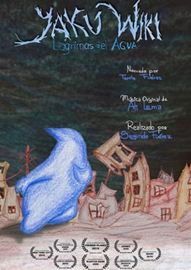
Afiche. Reproducción con permiso del Segundo Fuérez.
Because these were the sketchings you had been doing for a long time, right?
Yes, precisely. So I never thought about doing something like a career in cinema, not with this work; I just wanted to do something and I didn’t think it would necessarily get a good reception from people either…
But it did.
It did, yes, it won. In that festival they gave it a prize for the best experimental animation. I didn’t know what that meant. Why experimental, if I didn’t do any experiments, I thought.
Video of the prize giving:
You didn’t realise that your work was experimental until then told you, right?
Until they told me. And after this festival it went to participate in other festivals, there were people who saw it in that festival and said we want to see it in this other festival, and they wrote to me. And in this way the documentary started to travel. And that’s it for this work.
So that changed somewhat your idea of the value of what you were doing, I imagine?
Yes. I was still studying accounting and business administration, but while I was doing that, I was also getting more involved in the audiovisual world. I was trying to find out who else was doing it, where and so on, and then I met… Ah, after that, no, before doing the animation, I had already made a much more experimental film, much more, how should I put it, without any professional cinematic language, much more precarious in every sense. I told you a little bit about it at the beginning. I have an older brother who didn’t study, I was studying, I didn’t have any money, but he worked and had bought a home video camera that was sold at the time, and we started filming. Every weekend, several of us would get together and walk up the mountain to film this horror film based on a character from an oral story. And this film managed to immortalise my mother; she appears in a scene telling an oral story while making tortillas over the fire. After that, before the film was released, she died.
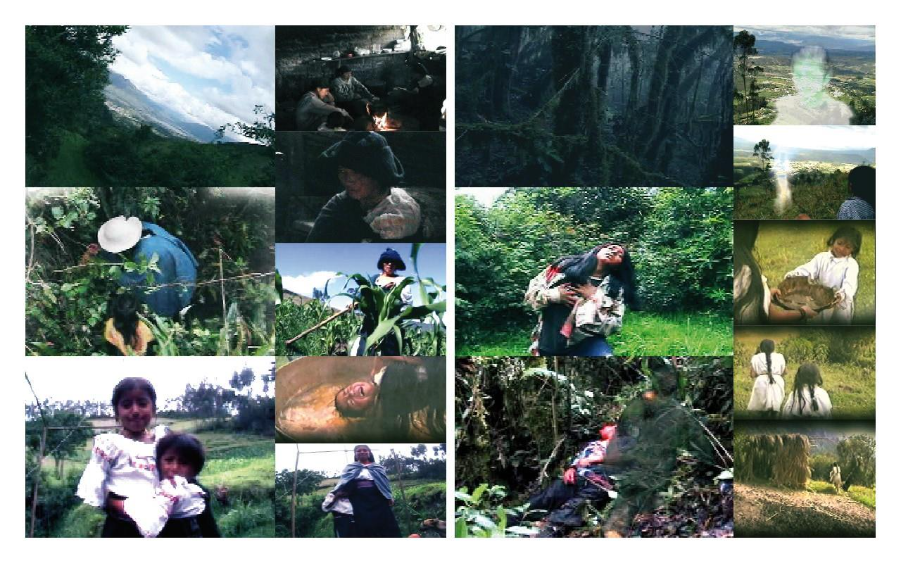
Fotogramas de la película. Reproducción con permiso del Segundo Fuérez.
This film was a real learning experience for us. I don’t remember how many weekends it took us to film it, but it was several. When we finished filming, my brother already had a basic computer that he used to capture and edit videos of social events he organised. He had also made some music videos for a group of musicians in his community, so he knew a little bit about it, but it was the first time we had tackled a film, with lots of cassettes and gigabytes on the hard drive. We didn’t know how to edit a film or add special effects, we didn’t have a computer with greater processing power, and my brother’s couldn’t handle it. I remember convincing my older sister to buy me one, saying that I needed it urgently for school work. My sister took out a loan and bought a cheaper computer, a very basic one that didn’t have the capacity to install editing software and process so much heavy information, so as soon as we started editing a little, the CPU burned out from being overworked. We stopped there for a few months, then she took out another loan to buy us another one. My sister sacrificed a lot. With this one, we tried to be more careful. We installed only one editing programme and rushed to edit and finish that film, which lasted about an hour and twenty minutes. And we premiered it here in Otavalo. I ran a campaign myself. Without knowing how, we edited a trailer. I didn’t know how to make a giant poster or a billboard. I didn’t know anything about graphic design programmes, so in Word, which was the only one I knew how to use more or less, I made a kind of jigsaw puzzle of how to get a giant image and I think I printed out 20 or 30 sheets of paper, like a jigsaw puzzle, and then I stuck them together with adhesive tape until I had a giant poster. Then we rented a school hall for about $400. We thought we were going to be very successful. We said, let’s charge 50 cents for admission and fill the auditorium for the first show, and that way we’ll recoup the $400. I also printed some small cards as flyers and handed them out to people on the streets of Otavalo until the day of the premiere arrived. That day we planned two showings, the first was to start at 3pm and the second at 5pm. No one came to the first one. Well, it’s very early, they’ll surely come later, we said. And no one came. (Laughter). No one came. Ten minutes passed, then 15, then 20. No one came. After half an hour, I think two people arrived, and since they were already 35 or 40 minutes late, we decided to go ahead with the screening anyway, since there were four people there. We showed the film, and by the end of the screening, a total of about 10 people had arrived. Among those people was someone who had heard about the premiere and wanted to film me for a report.
Report which includes a trailer of the film:
Full film:
And this person was someone who had studied film in an institution in Quito. His name is José Espinosa. Perhaps you interviewed him as well. So I met him for the first time in this premiere. In the report hat he did with me you can see the poster I did made of various bits of paper.
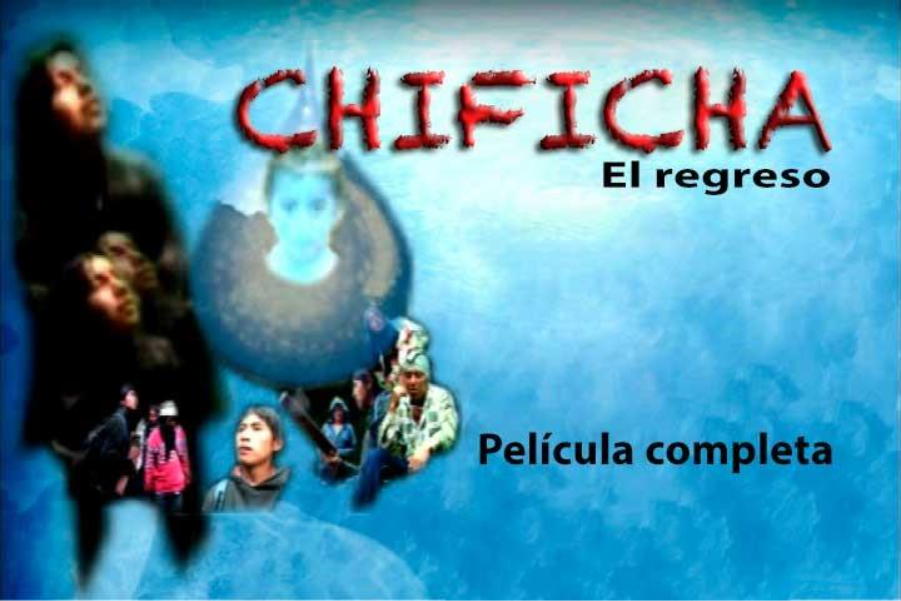
Photomontage that was used for the poster and also on the entry tickets. Reproduced with the permission of Segundo Fuérez.
From then on, we kept in touch, and he told me that there were other people in the film industry too. He told me about Alberto Muenala. He told me that there are film schools where you can study and that he is currently studying. So after all that, I made the animated short film that I already told you about. Joshi had created a scholarship programme at the institute where he was studying and invited me, saying, ‘I’m going to do a film workshop here in Otavalo, come along.’ I was interested, so I went and we spent our time learning. I think it was a workshop that lasted a few weeks, where the theory part was very short. We watched films and analysed them, we had a workshop on body language, and I liked it. At the end of it all, we shot a short film. They chose me to act in this work. The short film is called Maytushka, which is on YouTube, and I acted in it. The people who were most active during the workshop were given two scholarships to study at that institute. One was to study directing and acting and the other was to study photography and sound. I wanted the scholarship to study directing and acting, but they gave me a scholarship to study photography. So I left my accounting degree and went to study in Quito.
Link to Maytushka:
Wow, so this was completely risking everything to give it a shot.
Yes yes, completely, because I was already halfway through my degree in Business Engineering, where I had been studying already for three years.
So, what was your vision of what you wanted to do with film in this moment in time? Because, well, the organisation that you are running is called RUNAnimation, right? So in its name it shows this aspect of being a Kichwa cinema, let’s say. But what it always intended to be that way? How did you go about developping your ideas?
As a concept, I never thought it had to be Kichwa cinema. Because I’ve always had a human conflict with pigeonholing ourselves, separating ourselves into groups. It seemed to me that this separation creates counter-racism. It’s just that they, the conquerors, the colonists, they did this to us, so now it’s our time… For me, it was never like that. Although I also understand that racism, classism and segregation continue to exist among the so-called blue-blooded whites. I myself have experienced this from my childhood until now, but that doesn’t mean I’m going to take revenge or do the same to them. I said to myself, now we are in a new world in which we all share as human beings, no longer as ethnic groups, cultural groups, but as human beings who are on the same planet. Maybe one day beings from other planets will arrive, and then we will see that we are all equal, we are all from here. I always had that vision. What did surprise me, perhaps unconsciously, was when I started to see television programmes, series and cartoons; I could never see, I mean, they were all children of a certain standard of beauty, with short blond hair, speaking Spanish, eating foods that weren’t eaten here in the countryside, doing activities that were foreign to us. And I would say to myself, why can’t I see an indigenous person like that with long hair in cartoons too, doing agricultural activities, speaking the language from here, grazing sheep, but no, why doesn’t anyone do that? So that struck me as odd. Why isn’t there a little mud house with a child in a poncho in a hayfield eating ocas? That’s also part of this world, and there’s nothing wrong with it looking different. I never saw an animation about that. So that was also a trigger for me to want to make the animation. But that idea was reinforced when I… My mother died.
I lost my father when I was six years old; he disappeared. I don’t have any photos of my father, only fleeting memories in my mind. It’s a completely mysterious story to this day, because one day he went out to town to do some shopping and never came home; he left the house with nothing but the clothes on his back and disappeared. I was six years old, and it left a mark on me because I would have liked to learn a lot from the activities my father knew how to do. He was a musician, a craftsman, a farmer, a weaver, a carpenter, a man of ritual, a wise man, everything, all of that. He built musical instruments. And I never got to learn, plus my mother suffered greatly from that loss. She would cry, and it was like… she would cry, and it hurt me so much to hear her. I have that image and her voice engraved in my memory, reciting phrases like poetry about my father while she cried among the cornfields covered with fog: imashpata sakiwankiyari, maypita purikunkiyari, ña tikramuyari, paktami kashun nirkankika, she said these phrases while crying. And out of sadness, my mother died a few years later. So since the time I lost my parents…
That’s a very difficult experiment for a child, an adolescent. These are stages of one’s life that leave a mark.
Yes. Exactly. So my dad, I remember him telling me lots of stories. My mum too. When they died and disappeared, I felt it was very important to rescue or find a way to immortalise those words, those stories they told me, those lessons they taught us in general, and now my memory is trying to take them away from me, I have no one left to tell me those stories. So from there, for me, the tool of cinema is important to take those words or my memories and transform them into cinema and immortalise them. This is my main motivation for making films. Perhaps before, I wanted to do it because of my curiosity after seeing television for the first time, but it wasn’t something very important, it wasn’t something I absolutely had to do. Now almost all my work is focused on that. On oral histories, the wisdom that has been passed down to me. Right now I’m making a film inspired by an oral history that my mother told me.
We will come back to this full-length feature film, I’d love to know more about it, but let’s come back to it. Well, and in a more general way, because it seems to me there are three key elements to your film work I’d like to explore further…
Sorry, now I remember what you asked me, and I don’t think I answered whether I had thought about labelling it as Kichwa cinema. For me, of course, that connection was more personal, it’s more of an intimate motivation for making films. I never intended to make a certain type of film. I never said: I’m going to make independent films, commercial films, Indigenous films… nothing like that. I never asked myself, nor did I know what types of films there were. I simply wanted to immortalise the words and wisdom of my mother and father through audiovisual media. And then, whatever happens, if that film manages to be independent, it will find its own path. If it manages to be commercial, even better, because money is what you need to make films, right?
Sure, so really the work you do is out of almost a necesity of love, nostalgia, and mourning in some way.
Exactly, for me, making films is a process of mourning, of nostalgia, of being able to materialise someone’s words that will soon vanish in the wind so that future generations can still appreciate them, thus prolonging my parents’ presence, continuing to relive every moment with them and not forgetting, because memory is very fragile. For me, cinema is a patchwork of moments, like Frankenstein. As you get older, you forget things, because right now I don’t remember much. I have very fleeting memories of my childhood. But I think that making these films will remain with me for eternity. That’s why I also try to write sometimes. I have many notes, I write down short phrases from memories or dreams in prose form, mostly in my notebook. These fleeting memories of my dad when we went to the mountains to collect wood to make plates or reeds to weave baskets, when I combed my mum’s hair, when she played the harp or the violin, when she was weaving and the shuttle fell and I waited at her feet to pass it to her, when they went with the music to a funeral and came back with lots of fruit and food. And sometimes I say, maybe I’d like to make a film about all that, but then I think that making a film is very complex and expensive, it’s easier to write about it and maybe someday I’ll publish a book, but… the idea for me is always to immortalise the wisdom. At this point, I don’t care if it’s necessarily in cinematic form, it can be a book or it can be an illustration, a comic, embroidery, weaving, an audio.
And actually your production has always been hybrid in that sense, right?
Yes, exactly, it’s hybrid. Um hmm, so it’s totally experimental, just like they told me. (Laughter). I don’t commit to anything, I just mix things up and I like to take risks that others say shouldn’t be taken. Right now we’re doing a lot of work with embroidery, fabrics and fibres because embroidery is also being lost in communities. People don’t embroider anymore; industrialisation and computers have replaced the hand, people are no longer embroidering.
And who does that embroidery?
My sisters, and other people close to me who want to do it. I do everything too. Maybe people say I’m weird, because there’s a lot of stereotyping here due to the macho culture that exists. They say: this isn’t for men, this is for women… I do everything, I don’t care if society judges me. I cook, sweep, embroider, knit, and use all of that in my art… It must also be because when my mother died and my father disappeared, I had to survive on my own… I have my brothers, but they have their own families. I am the youngest and have to take care of myself. Well, now I also have the responsibility of taking care of my nephews. I have an unmarried sister, a mother of two children who are studying. Their mother has no income and as they have no father to help with living expenses, I have to fill that need and I like to support them, even though I don’t have enough for myself.
So in other words you had to take on the role of both mother and father in some way, would you say?
Yes, well, I help a bit and yes I love them like they were my own children, who knows how they feel. I would like to support more, but life is hard.
And it’s interesting because one of the things I was hoping to mention to you is that in the world in which your production moves, your animations, but also the short films, it’s a world which is very feminine as well. There is a focus on the mother and also curiously the child protagonist is often a a young girl.
Many times, yes. I wasn’t aware of that. Almost always when I start developing an idea for anything, maybe a short film, a feature film, whatever, the character that comes to mind is a woman, a girl, a mother, a grandmother. And then I started to question myself about the reason why, and I said, of course. I think it has a lot to do with how I grew up, the environment I grew up in, because I lost my father very early on, so I was more involved with my mother and sisters. And also, at a certain point, when I was more aware, already in my teens, my two older sisters were single mothers and I had to help take care of my nieces while my sisters had to go out to work to earn money. From then on, I began to question the role of men who get women pregnant and then disappear, and I reflected that I am also a man and I don’t want to be like that. So I started to hate men a little, but then I learned that I simply don’t have to be like that, I have to be different. And it’s from there I think that the elements for creating characters in art also come from. For me, the female figure has been more important, female characters in general, because that’s how Nature is, Mother Nature that allows us to live. I want to give women an essential value even in those simple everyday moments where it seems like nothing is happening.
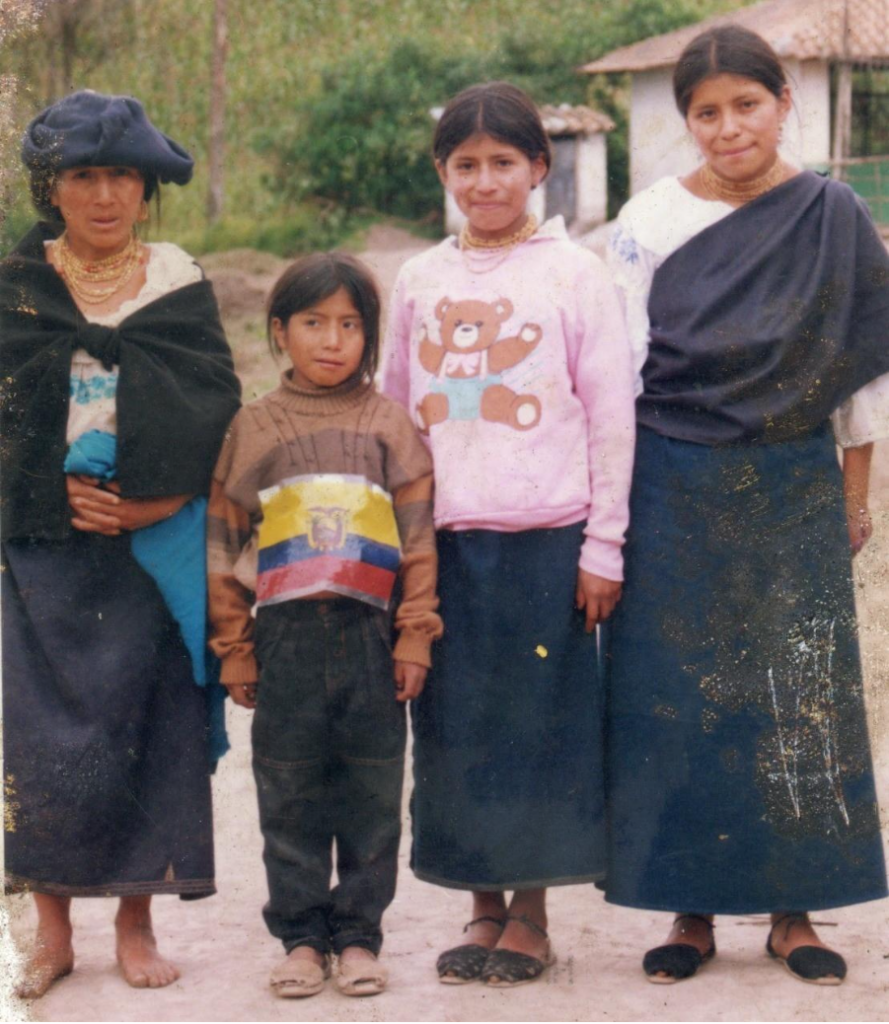
The only photo of my childhood. On the left is my mother and after me, my sister and my other sister who always support me. Reproduced with the permission of Segundo Fuérez.
Of course, and it is a form of gender expression which can’t be necessarily reduced to the sexuated body, if you will.
Yes, exactly. Yes, yes, from the reality that I’m experiencing I am now more conscious of this and I purposefully look for female characters now in my artistic exploration.
Yes, yes, and another thing that really calls my attention in your work is that, and well, this is something which is explained in part by the choice of using animation, right, but let’s say that there is an interest in your work in the world of children.
Yes, because I also want to share a little bit of everything that is experienced and believed in communities with younger minds, uncontaminated sensibilities, so that they grow up knowing the variety of cultures and wisdom that exist in the world, and that way the world is a more beautiful place. With that idea in mind, I thought that this tool of animation could be a bridge to reach a younger audience. I think that we adults are already set in our ways, with all the ideas we were raised with. Speaking of racism, for example, it is difficult for a 60- or 70-year-old adult to change their way of thinking, because they grew up with their own ideas based on what they experienced in their time, so they will remain racist until they die. I know some old people who are like that. That’s why it’s important for me to work with children, who are still fresh, whose minds are not yet filled with complexes, who are still free. If we showed them more varied content, where… If we showed productions from the countryside on television, where they could see this variety of ethnicities, cultures, and knowledge, they would normalise it, and when they grow up, they would not be surprised and say, “How strange, why are those Indians or those black people there? What an ugly language,” and all the other things that arise in this social conflict. So, I have always wanted to work with children because I believe it is necessary to reach those minds that are still innocent of the world. Let them grow up knowing about variety and richness, and in the world we can live together better, perhaps.
So we might say that your cinema is one of love, nostalgia, mourning, but also of healing, in a sense? Recovering something for a generation younger that you had to learn, let’s say, in a more difficult way?
Yes, well, I don’t know if healing is the right word, but rather a process of becoming aware of the diversity that exists and trying to coexist respectfully and harmoniously with each human group and with nature. These are constant questions not only for me but also for the society in which I live and the society that is coming. There are colleagues who have collectives that work from a position of what I call counter-racism. They often say that they have been dominating us for 500 years, and now it is our turn to dominate. They even say it like that. Whereas I wonder, why do we want to dominate? If we did that, wouldn’t we be doing the same thing as them? Maybe that’s not the way. We are all human beings, colleagues, brothers and sisters. We should share what each of us is, our differences; we should share ourselves and accept each other. That would be ideal. And to achieve that, I must continue to express these concerns through film. I don’t want us to continue separating ourselves into groups, saying that Indigenous people or that other group is better than another. That’s why, now that I’m more aware, I try to strategically start my productions with female characters, but without directly using Indigenous elements. Because I know that society, just by seeing a poster with an Indigenous woman, will say, ‘Oh, I’m not interested in that film.’ That rejection is already unconsciously ingrained, I’m referring to that other audience that is not in the art world. That’s why I try to make the posters look more normal or accepted in this society, like a white girl or images that don’t directly show Indigenous features, because that distances them, creates a barrier with that other viewer. So, in this film I’m making, for example, it’s a girl in a city dress who starts the story. Obviously, the girl’s appearance gives her away because she’s darker-skinned and everything, but she’s wearing a dress, so maybe it’s not such a stark visual barrier, and someone might be interested in seeing what it’s about. And then, little by little, in the film, you discover that she also belongs to this other world, the language, the food, the thoughts…
I’m interested in this aspect, because it’s like you wish to take your audience on a journey which is also at the same time a lesson.
Yes, and I would like to… My goal has always been, as I said, to reach people peacefully, inviting those other audiences who don’t watch these films. Because the people who are interested, the people who are somehow connected to indigenous culture or art, whether good or bad, will want to watch them. But I want to reach those other people who don’t want to watch indigenous films, who only consume Hollywood superheroes.
And because, on top of all that, it´s a good film.
Exactly, I want that other person to see that there is also diversity and that we have to accept it, and maybe they will even come to like it. So that’s my goal, and I don’t want them to dismiss it right away after seeing just one frame; I want them to give these other stories a chance. I would like to do that, maybe it’s a bit utopian, but I would like to do it.
Ok, so before getting onto the full-length feature, because I’d really like to talk about that, let’s talk about your short film, Kuychi Pucha.
Ah, yes, about the workshop.
That’s right, this film came out of the workshop when you were still studying your degree in filmmaking, I imagine.
All this was in 2010 or 2011, I don’t remember exactly. Before that, my family, friends and I had already made our first film, which we called ‘El regreso de la Chificha’ (The Return of La Chificha), which I told you about at the beginning. We made it in 2007 and released it in 2008. That same year, I started working on an animated short film, which I managed to release in 2009. The RUPAI workshop came later.
Right, so in other words you already had your own trajectory.
After the premiere of El regreso de la Chificha, Joshi told me about Alberto Muenala and others. And when I was studying in Quito, in my first semester at INCINE, well, we had already met before, and I think that during those meetings the idea of forming a collective, Runacinema, was born. We already knew each other. When I was studying in Quito, they had also organised a film workshop at RUPAI.
So in some ways you went already as a filmmaker in your own right?
Well, in the first semester, I didn’t have anything yet, just an intention. And they finished the workshop and told me that they were going to make some short films as their final projects. So Alberto Muenala invited me and said, ‘Why don’t you participate with a script, with your idea? We have the equipment here, and we’re going to produce them as the final projects for the workshop,’ he said. And I said, great, let’s do it, because I didn’t have a camera, I didn’t have any equipment or a computer, nothing. It was an opportunity that opened up to produce that short film. As I had already made an animated short film, I still had that bug to make another animated short film. I had already written something small and had done some animation tests of a shot, I had made a storyboard. The story had to do with my mother’s death and my longing for her. I still felt a lot of nostalgia and sadness, and thoughts of reuniting with my dead mother ran through my head, so… That’s where the character who follows the river to the thread that connects her to my mother’s spirit, who is on another plane, comes from. It’s like a… how do you say it? I’ve forgotten the word. The girl is like me, she’s my alter ego. And she meets my mother’s spirit there, and everything else you see in the short film Kuychi Pucha. When I was thinking about animation, the character was going to be called Puka, and therefore the title of the film would also be PUKA, not Kuychi Pucha. You might have noticed that this short film begins with a girl who is not dressed as an Indigenous person, but rather in a red dress, and little by little we discover the Indigenous world to which she is connected. Well, I don’t know if my idea works, but that’s how I did it. And that’s how it is in life now, too. We are Indigenous people, but we dress like city dwellers.
The short Kuychi Pucha:
And again we find all of these experimental elements…
Yes, since I came from the world of animation, I had a general understanding of how special effects worked. I was very interested in special effects because my priority was to immortalise the oral stories my parents told me. These oral stories are magical, with powerful characters and extraordinary settings that do not exist in real life. And to recreate that world, it’s not just a matter of documenting it with a camera; you need special make-up, camera tricks with light, or work that you have to do on the computer with special programmes. So I started researching, I installed image composition and 3D modelling programmes, I also tried stop motion, although without any noticeable results yet; in fact, everything I had tried before didn’t turn out so well. But with all the previous self-learning process, I already had an idea of how special effects worked. I already knew a little about how to cut elements in Photoshop, generate layers in After Effects, make matte paintings, and things like that. So, in Kuychi Pucha, I began to apply these techniques for the first time, for example, the rainbow, the rain, the children who appear and disappear in the waterhole. At first, I wanted the wool to move on its own, and I have a test version I made with balls of wool that jumped and walked as if they were alive. I also have a test version of the children from the water hole animated in 2D, but I couldn’t do it because I don’t know how to use these programmes well enough. I couldn’t do it, so I didn’t use it in the final cut. Ah, because I couldn’t figure out how to delete it, because I recorded some shots with wool buckles tied with invisible nylon thread, but you could see it on camera, and I didn’t know how to delete it. Now I know how. I wanted to delete it, I knew it was possible, but I couldn’t. This is how this short film was born and made in the RUPAI workshop, thanks to the equipment and my colleagues in the workshop who contributed to weaving this story together. Although simple, it was time-consuming to make, especially in post-production, which took me almost five years.
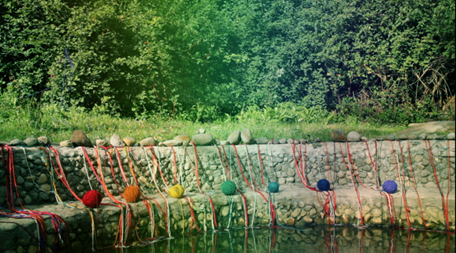
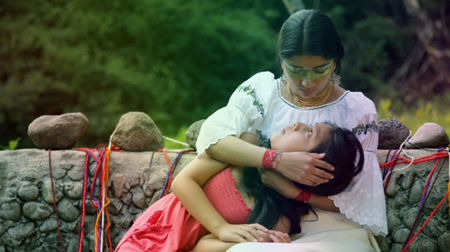
Fotogramas del cortometraje Kuychi Pucha. Reproducción de las imágenes con permiso de Segundo Fuérez y RUPAI producciones.
Sure, but how was it in this work to work alongside… because I suppose there is a moment as well when you take in the idea that we are all here, from Otavalo, all more or less from the same generation, making film, right? Different shorts, different perspectives… How was the experience of seeing this movement?
Yes, I was very excited. The workshop scheduled several shoots, from such-and-such a date to such-and-such a date, one short film, and then from such-and-such a date to such-and-such a date, another short film. I participated in a couple more besides Kuychi Pucha, I think. In one, I did photography, and in another, I did… I don’t remember. But, I don’t know, I wanted to do this and that, even though I didn’t know much either, so I thought I’d make the most of my time creating the audiovisual work. From my financial perspective, making the most of my time meant saving money; every second that passed was a penny down the drain. That’s why it was important for me to keep moving all the time, and maybe that’s why I couldn’t really flow with them. I felt that their filming pace was slower because they got distracted very quickly, they made jokes, they played around, there was a lot of unpunctuality; it’s okay to have fun, but for a little while or during breaks, not all the time. Rather, you have to be focused all the time and enjoy the filming. Maybe I’m wrong, but that’s how I see it. I get along well with Frida, but we talked about this once and she said it was a clash of schools. Maybe so, but for me it’s always about making the most of the filming time to create that story.
Perhaps it was another moment of their lives, too?
Yes, perhaps they were still at an age where they didn’t take cinema very seriously. But I also think it’s the difference in needs and the environment in which we grew up that shapes the way we see life in general. That’s why I always wanted to make the most of my time and would say: we have to hurry up, let’s put the camera here, what comes after this shot, let’s go here and boom, boom, like that.
Behind the scenes of Kuychi Pucha:
Because Frida [Muenala] was also the photographer for you in this short, right? And I think she has a clear talent for photography, I mean, there are very interesting things in that film.
Oh yes, she was in the camera… The workshop dynamic was to rotate roles in each short film. At that time, I was just in my first semester and didn’t know much about film dynamics yet, and I think she was one or two semesters ahead of me and at San Francisco, so I thought she would know a lot more and teach me. When we started shooting, I didn’t really understand what a director does, because I was in charge of directing, and from that lack of knowledge, seeing that the others were moving more slowly or were also disconnected from their roles, I began to input in all departments. I would say, ‘Let’s put this on the set,’ I got the costumes myself, I said where the camera should go, what sounds we should record, in short, I think I intervened in almost everything because that way I felt that the team was still active in the shoot. Maybe I shouldn’t have done that, I should have let everyone do their job. But it was because I didn’t really know much about the roles and dynamics. And well, in general it was interesting because, in a way, we all supported each other. We enriched each other by giving our opinions, even on the scripts. I remember there were sessions to analyse the scripts and contribute ideas. And I contributed from my point of view, of course, at that time I don’t know what I said, anything really, but we talked.
And then you formed part of Runacinema, which lasted for a while, right?
Yes, we formed Runacinema after these workshops. That’s where we met more people and realised that we needed a space to continue practising filmmaking, a laboratory that would allow us to explore different languages, tools and stories, and above all, keep us active and gain practical experience. I think it was Joshi who was leading or at least calling the meetings, and we sometimes held them at his house. By then, there was Frida, Alberto, Diego, Joshi, and also Humberto Morales, who they call Pipo. I don’t know if you know him. He was also graduating from San Francisco and was going to film his thesis. Since we already knew each other, he invited me to act in his short film.
I’ve been an actor, an assistant, everything really, and I also learned from the people Pipo brought along, his mates from the city. I found it important and it really connected with me that we were all mixed-race and Indigenous people working together towards a single goal: the short film. Everyone contributed from their own reality. For example, it was said that the actor had to make a movement like this because that’s how it is in real life, the art had to include those elements or be in that order because that’s how it is in the communities. And I liked that, that everything added up, regardless of whether the person saying it had necessarily studied film or not. At least that’s how it seemed with the shooting of Pipo’s graduation short film, I don’t really remember much about it anymore.
What is that short called?
Yachack. It’s also on YouTube.
Short Yachak by Pipo (Humberto) Morales:
And so was it after that that you formed Runacinema?
And with all this stuff with workshops, graduation shootings for other colleagues, etc., the idea of Runacinema got started.
Before this, but after the workshops with RUPAI in Peguche, I remember there was another workshop that RUPAI did in Chimborazo. There I met other people too, a colleague with the name Awki who also came onboard later with the film Killa as part of Runacinema.
Extract from the video Runacinema:
And Patricia Yallico too?
I didn’t meet her. I think she connected with the group long before the workshop. I think RUPAI and Alberto Muenala had participated in another workshop experience before this one. And in that coming together they had met Rocío Gómez, Patricia Yallico and others too, well I don’t know about that, but I didn’t know Patricia yet at that time.
Mónica Vizarrea?
Yes, she was in our workshop, she wrote a script, I did the photography for her short.
Short by Mónica Vizarrea:
So after all that, we started getting together and talking about creating a film project from the Runacinema Laboratory we created, a feature film. Not just short films anymore. We had to come together and create a story, support each other. Here in Otavalo, we can do that too. During those discussions, I think the National Film Council opened up funding for feature films. At that time, I was a novice, I had no experience. They were the ones who knew the most technically and professionally. I came from a world of learning on the ground and experimentation. So then they launched the idea for Killa, the film. They started writing it, and we also started having sessions where we shared and gave our opinions on the script, and so on. The portfolio was put together, we presented it and I think we won the funding at some point, I don’t remember exactly how it went. And that’s how the film was born, and we became part of the team. Alberto Muenala presented his story and wrote the script; he was the director. Joshi and I were part of the electrical team, as lighting technicians, and I was also the microphone operator. Humberto Morales, Pipo, was the producer. And that’s how we made that film.
And how did you find that experience? Because this was a big project, right? I mean…
Of course, yes, for the first time doing such a big project. I think there were generally some successes and some mistakes, as always. And yes, from inexperience in confronting such a large project.
Yes, and on everyone’s part – nobody had participated in such a big project before.
No, I think this was the first fiction one, and I think those successes and failures were influenced by the teaching methodologies used in schools, perhaps as Frida said, so our pace and the way of working on a film shoot clashed a bit. Most of them were from [the University of] San Francisco, and I felt that there was a bit of ego there; they were the ones who knew how to do it and this was the way it should be.
So there was a kind of elitism between the two film schools, would you say?
Exactly, among the schools… INCINE was basically just me and Joshi. Just the two of us; the others were from San Francisco. For us, it was important to be alert at all times, stick to the schedule, and give our best for the common goal: the film. Meanwhile, [the others from San Francisco] took it very easy, didn’t stick to the schedule, and were easily distracted. Well, maybe that happens on any other film set too.
But I imagine it was an experience through which one learns a lot, right?
Of course, everything that happened in this film taught us a lot. At least for me, I don’t know about the other side, but I think I’ve seen successes and mistakes that I take into account when moving forward with other projects. Even to know whether to stay in that group or go your own way.
And this was your decision, right? I mean, there was the dynamic you were mentioning, but in the end you decided to follow your own path.
That’s right. The thing is, for example, I find disrespect in general very annoying. Here, people often talk about “Ecuadorian time”, so being late is very normal. We had meetings to discuss the script or whatever, but they would arrive half an hour, 40 minutes, sometimes even two hours late, and we would be waiting, and then they wouldn’t even apologise, they would just turn up as if nothing had happened. I would travel four or five hours in advance from Quito to arrive a few minutes early for the meeting. Once, I remember paying for a taxi from Quito because I realised I wasn’t going to arrive on time, and it’s not that I have money to spare. In fact, I think I’m the poorest, but I was interested, I was excited about the cause of the project or collective, and it’s not like I was the one organising it, I was probably the least important person in the group. I could have done something at home in 40 minutes. So that bothered me, it didn’t seem fair. I’ve always tried to be punctual, although sometimes circumstances beyond your control make it impossible. If the meeting was scheduled for 9 a.m. and they were going to arrive at 10, why didn’t they tell me the meeting was at 10? I tried to say that we should be punctual, and I think that bothered them. They justified it by saying that’s normal, that’s life, that’s Ecuadorian time. But we have to make an effort to change that stereotype. Well, it’s a reality here in Ecuador, but I think we should make an effort to change that.
You were looking for a kind of professionalisation of the time frames, then?
Yes, perhaps so, to learn more and do more projects. In addition, I had to pay my own expenses while studying in Quito and I also had to work, apart from my study obligations. That is why it was necessary for me to respect the meeting schedule.
So then, what happened after? How did your own film work evolve after this experience?
Well, after I was in INCINE, living in Quito. Long before that, before my mum died, I left my community to look for a way to sustain myself. Because my siblings had already divided up the inheritance and they tore down the house where me and my mum lived.
That’s awful. So you lost your mum and your home at the same time.
Yes. I lived here in Otavalo, I rented a room around here while I worked for an NGO teaching literacy, conducting surveys, and at the same time I did animations. So, for me, time was very important. The other folk didn’t see it that way, perhaps because they didn’t have to work to pay for rent and food. They enjoyed their youth and had a more relaxed life, which is fine. But on set, they also took it very easy. They were supposed to be there at a certain time, but they didn’t show up until later.
That aside, the truth is that INCINE was strict. When the time was set, that was when we had to start. If you didn’t arrive on time, and if you were, for example, a director of photography, then you lost that opportunity. You were no longer the director; they gave it to someone else who was punctual and wanted to do photography for that job, and as you were late, you were left as an assistant.
And I suppose that was a professional lesson as well?
Exactly. So if you wanted to be a director of photography on a project, which was difficult, they chose you based on your attributes, your dedication and your responsibility to the project. And that also forced you to be punctual. If they called you at a certain time, you had to be there an hour early, at least if you lived far away or whatever. You had to be attentive to every movement on set; that was the only way you could contribute to the shoot. So those things taught me, and I think that’s what I learned most at INCINE. I participated in some productions there. And then, as soon as I graduated, I started working on several things because I needed money to pay for my living expenses. So I started working as a photographer at a university, but I also went from time to time to do reports for a television channel, a production company. I did a lot as a camera technician because I graduated as a film photographer. According to my degree, I’m a film photographer, but I also do directing, animation and drawing. And all this multidisciplinary activity is what has taught me to move into directing because I’m gradually learning how each department works. Before, it was difficult because I didn’t know how everything worked, but now, if someone has sound problems, I can help them myself.
So I started working at many production companies as an editor and cameraman. And then, as people got to know me, I began participating in films made by fellow filmmakers in Quito. There was a time during Rafael Correa’s presidency when they started creating the national television channel and were keeping it going it with lots of productions. There were television series, and I was able to participate in some of them. A series about cooking for children, for example.
So still keeping that focus on productions for children.
Right, at least in productions where we can influence the creative process and the script. I’ve worked on other adult productions as a technician, but there’s not much room for input on the ideas there. We also made a stop-motion animated series called Payanga, which is on YouTube.
Payanga:
And then I got involved with these guys who were from INCINE, the same organisation as Enchufe TV, I don’t know if you’ve heard of them. They became famous, I think they’re still famous worldwide. They make sketches for YouTube. So I worked with them when they were just starting out, doing a bit of everything. I was a lighting technician, camera assistant, sound engineer. I was sweating the whole time. When they said cut, I was the one who grabbed the tripod and put it there, when they said action, I was with the microphone. And with them, as with all the projects I participated in, I learned more. Because at INCINE, they taught me more technical aspects of photography, but I didn’t learn, for example, how to direct, how to dialogue with actors to achieve a certain state or character, etc. But in these projects, participating professionally, I was watching and learning. On these shoots, I saw how an assistant director works. Some assistant directors were violent, and others were very peaceful. And I analysed that, how they could have that leadership ability. And I started to like it, even though it’s very hard work, mentally and physically. Little by little, I think I moved from the technical side to directing in cinema.
And lately I was involved in assistant directing and production. Not so much in the technical side anymore. I spent much more time in the photography department before. I was director of photography on about three films, which are not famous.
So it’s almost as if you’ve gone through that technical part of the work to get where you are now, right? Production and directing. Before we talk about your feature film, I have a question about something I saw that interested me, which was your work on midwives. I’m interested because I always feel that there’s a certain sensitivity in your work towards the role of women, so I’d like to ask you a little about this work, but also more broadly about that sensitivity in your work.
Yes, again it comes from this connection with the environment where I grew up. My mother was illiterate; she couldn’t speak Spanish, read or write. But I could see that she knew a lot. I wondered, how could she be considered illiterate by the state, as someone who spoke a language with no value? She knew a lot, she knew about medicinal plants, about the lunar cycles, about agriculture, about weaving, she knew how to talk to nature. She taught me everything while we were there picking grass for the guinea pigs, when we were turning the soil to sow, when we went to the mountains to bring wood or reeds to weave baskets. She was always explaining things to me about plants, even how to greet them. This one is called cumbari, she would say, you must say good morning, my friend, let me pass, and it is used for this, and this plant can be combined with this other one, and so on. She taught me a lot. For me, it was important to immortalise those words, that wisdom. And also to give value to rural women for that wisdom, something that was never given to them. They have passed it down from generation to generation, only through dialogue, only through speech. They never wrote it down, they never had a title or a piece of paper saying she is the midwife. They simply know about life, without needing someone to recognise them with a piece of paper, which is now required to say that you supposedly know. That seemed very sad to me, I don’t know, it’s like… There are many grandmothers who still know, but they are treated as useless. They even go out begging out of necessity and are looked down upon, so much wisdom trampled on by society. My mum also went out begging here. I remember we would go out, she would send me to collect medicinal plants from the ditches to sell or exchange for other food. As I didn’t have a dad, my mum helped me with school by selling these medicinal plants or flowers or grass for guinea pigs. So I would gather them, we would go out to sell them, and then we would stop by the market, in the fruit section, and pick up the little oranges that were starting to rot and that the vendors threw away. We would collect those to take home to eat. On Saturdays, there were also weddings at the church, and we would attend to collect the rice that was thrown at the bride and groom. We would sweep up all the rose petals from the floor with a broom, and at home we would separate and wash the rice. That was the only way we could afford to eat rice. I remember that when I woke up very early to the sound of a spoon hitting a pot, it meant we were going to eat rice. It was the happiest day of my life. I would hear that sound, jump out of bed, and run to the Tulpa, which was right there next to the mat where we all slept together. All those needs, I think, have left their mark on me and shaped the value I now place on them. This opportunity and this tool in my hands that I can use to give them immortal value.
Let’s speak about your full-length feature, then. Which also shares these experiences, right?
Yes. The feature film is called Puka Urpi. In English, it’s Red Bird. I wanted… when I was still making these series for the channel I told you about in Quito, I already had this project, which was around 2013. I had imagined wanting to make a 12-episode series with each episode lasting about an hour. I wanted to make a series of self-contained episodes. Each episode would tell an oral story or one based on wisdom that my mum or dad had told me. So I wanted to make a fairly long series about that. First I said, I want to do something about oral stories, and I started collecting 12 oral stories that my mum and dad had told me and wrote them down as a summary. And as a pilot, I wanted to record this one, which is Puka Urpi. And that’s how it was born, but I saw that it was very difficult to get funding. It was very, very, very difficult, and then Rafael Correa’s term ended, and he did have more funds for film production, because it was much more complex before. That’s when I thought about the project, no longer as a pilot for a series, but as a 3-minute animated short film. So I wrote it. I had written the basics for a three-minute short film using stop motion animation. Then there was a call for submissions for live-action short films, so we applied to make a short film. I was already working with my colleagues, my producing partner Jacobo Valladares, whom I met on the series Hoy Cocino Yo, and I also made Payanga. With him, we adapted a short live-action film and applied for and won this small grant, which was $8,000, I think. And so, with that, we began pre-production. Jacobo helped me refine the script, do scouting, put together the portfolio, and lent me his equipment, but he withdrew before filming with the idea that the fund would yield more. Well, he didn’t leave the project; he continued and continues to support me as an online producer, not on set, to save costs. But that money was gone before we even started. It ended up being used just for making portfolios to seek funding, surrounding myself with people who wanted to support me and then didn’t. The fund wasn’t enough to pay enough to those who wanted to be part of the project, so they left, but for that short time they were there, I had to acknowledge them, and the money ran out. I think there was about $2,000 left to shoot. I didn’t like taking advantage of people. If you were there, even for a day, even for an hour, supporting the film, even if the work you did didn’t make it into the final cut, I think it should always be recognised. And in the credits too. So I paid people, and that’s why the money ran out. I said, I’m going to make the most of it, and I hired the heads of the most essential departments. I hired a photographer, a sound engineer, someone from art and someone from production and assistant director. I think I hired about four people, apart from the actress, who I knew I had to pay. I calculated that $2,000 so it could be distributed fairly, decided to pay per day, and even then it wasn’t enough to hire people for five days. I had to find money elsewhere to pay the actresses and for food. I filmed with basic equipment, with almost no frills, with minimal equipment, but more professional than before. A few scenes were filmed, and there were still many scenes left in the script. I don’t know how I managed to justify the short film in the end. But then I said, I have to keep going, and I started filming on my own with my family, without any funding.
This is a family film for this reason. My sister, my nephew, everyone supported me. And I did everything. I went back to how I started, doing everything myself. Now in a slightly more, let’s say, conscious and professional way. But at the same time, the project took on a life of its own, it got longer and turned into a feature film, although I started to feel frustrated because somehow the ideal, the film-making process that they teach you at school and that is also handled professionally by departments, and that, apparently, is the way the industry validates a film. I couldn’t do that, and it frustrated me. But I had no choice because I didn’t have any money; I had to make that film anyway.
Trailer: https://youtu.be/6G–Gh7fOy8?si=mz0zMHigycf2OKgL
That’s amazing, finishing a full-length film like that. And so now it’s in post-production?
Yes. We’re currently mixing the sound. It will be finished by the end of August, yes. For this post-production stage, we had to run a crowdfunding campaign, and we also applied for national funding, which we were lucky enough to receive. That’s helping us to fine-tune the film. But it has been a tough road, with everything I’ve told you, since the project began with the short film fund in 2017. It’s been several years now, about six or seven years. I wonder how a project can take so long. It seems like we haven’t stopped working, but a lot of time has passed. We’ve sent it to some Work in Progress spaces and they liked it. The story is simple, but it has had good feedback.
Yes, tell me a bit about what it’s about.
At first, I wanted to make a short animated film based on an oral story about how human beings transcend into other beings after death, but it changed into a live-action project. I wanted to explore a more poetic photographic language, natural lighting and more contemplative shots, like Kuychi Pucha, which has moments of contemplation, not very long, but with a more poetic connection to nature. In this one, I wanted to start with the camera on the ground, the point of view emerging from the earth like a plant. And then gradually rise until ending up with a bird’s-eye view, as the spirit of the deceased mother looks at the girl through the eyes of a bird that is watching over her. So I already had ideas for camera movements that required a lot of tools, which cost money. Cranes or helicopters, and at that time drones weren’t very common yet, so I mean, now it would have been faster with a drone, cheaper to buy a drone somewhere and that’s it. (Laughs).
But this film, with all the difficulties it faced, ended up being more like a documentary. In fact, at these Work in Progress festivals, they see it as having documentary value, even though it is fiction. They say it looks like a documentary because the protagonist is a 5-year-old girl who has no knowledge of how to act, but you feel the connection with nature and it feels very intimate, as a documentary can capture that. I had to say things and take advantage of and capture moments, just like a documentary filmmaker. And I didn’t have time to say, “Oh, walk here because the camera is going to move at such and such a pace,” nothing like that. The same with the grandmother, who was another character, so the film ended up being almost documentary-like, with a basic photographic approach that I think is acceptable, but I never wanted to do it that way. I was there trying to capture the moments in the best way possible.
But that is also a choice, right, and also a lesson and a great achievement, doing a full-length film.
Yes, at the same time, I realised that each project takes its own path and you have to be flexible, give your best and help it follow its own course. If you have money and all the paraphernalia and all the departments, then give it your best, make the most of it to get the most out of it; if you don’t have it, make the most of it anyway. But try to tell the story, don’t use the excuse that you don’t have the money to make the film well.
Right now we are in the process of embroidering frames because the film also combines embroidered animation. So we enter a world of fantasy or imagination of the protagonist, the girl, and we enter the world of embroidery. Although I would have liked most of the film to be animated, it is only a small part. Embroidery is a skill that is now being lost, a manual skill that used to exist in communities but is no longer practised much. I also want to immortalise this art for future generations. I say this because people may forget how to embroider by hand, although I hope they don’t, because now it is more common to use computerised machines that are faster and cheaper. I try to immortalise that moment, which I think was beautiful. And, well, I embroider in the same way. Yes, I spend my time embroidering, between the computer and then embroidering, the computer, making compositions, stop motion, etc.
Completely multimedia.
Right, exactly, you do what you can and what you have to do. Right now, thanks to a post-production fund, I’ve been able to hire a musician to compose original music, a colourist, a sound designer to help me… I already had the sound design, but now I have someone to help me fine-tune it, polish the technical details, and make what I’m trying to do more powerful. We’re working on that, so now I’m going between meetings and coordinating and… The special effects, same thing, we hired someone else who already has experience in that, so I don’t have to do everything myself anymore.
Well, we’ve been at this for quite some time now, eh, it seems to me, yes. So I don’t want to take up too much of your time either. No, I have one more question, and then I’ll give you some space and time to say something, anything you think hasn’t been said. My last question would be this: now that you’ve finished this feature film, how do you see the future of your cinema? What are your goals?
Right now, I want to finish this film so that more people can see it soon. I want to wrap up this project because I feel the need to tackle another feature film project. I’m still wondering whether I want to continue with live action or animation. Sometimes I think about dedicating myself 100% to animation because, as I told you, from the beginning it was animation that sparked my imagination. It’s what still fills my soul the most, what makes me happiest. Seeing inert dolls come to life is a unique feeling. I’ve always dreamed of animation. And I always wanted to see indigenous or peasant characters, characters that you don’t commonly see in animated films, and I would like to make a film with those characters and then show it to the world. My idea is not to stay here, but to go to festivals around the world. Hopefully, I will be able to go to at least one big festival, but to leave the country. To leave the country and show them how the diversity of cultures that exist enriches the planet and that it’s okay. The greater the variety of plants and flowers there are in the forest, the more beautiful it is, so I think I want to make the world aware of that and stop grouping ourselves into tribes and defending ourselves, fighting each other and, well, continuing the fight. That’s it.
I think that’s a lovely way to end this interview. But before we finish, is there anything else about your experience that’s important to note or mention that we haven’t had a chance to talk about?
Perhaps something about the Runacinema Laboratory. I have been involved in several groups, organisations, and associations focused on cinema. However, in all of them, I was unable to make it work due to a mindset that I have noticed. I realised that almost all of the associations had this concept of defending the group against others, saying that as Indigenous people we have to do this to give, demonstrate, and so on. That mindset shocked me. I was part of the Runacinema Laboratory. In fact, I was the one who said at the time, if it’s not going to be like this, we’re not going to respect each other, let’s close it down, and it was closed down. Then I moved on to another organisation, which I don’t know if you’ve heard of, maybe you did an interview because you mentioned Patricia. There is a collective in Quito called Acapana, for which I designed the logo and came up with the name Acapana, because I thought we had to be like a force, like a whirlwind, to make films. I conceptualised it myself; I was part of them. I don’t know, maybe I’m wrong, but I’ve felt that people talk a lot from their ego and talk a lot in words. They have speeches that attract the attention of others, but their behaviour, their way of being as people, does not go hand in hand with what they say; they are totally different. And that has disappointed me, and from then on I said, no, I don’t… Now I realise that I have to follow my own path, even if I have to disappear from the earth without making any more films.
Sure, but it’s true that there has also been throughout this time a desire on your part to make something work, wouldn’t you say?
Yes, I always hoped that we would help each other. Because obviously it’s difficult to manage to make a film on your own, hard to manage to work without experience. That’s why we said, why don’t we try starting something between us, even if we’re all here without the know how, but we can do something. This is why we have to come together with one single aim. But what we’ve found is that in the group there were different interests and colleagues who use film as an excuse to amplify their own political discourse. And that’s fine, but I want to make films. For me, call to go wherever, if we’re going to make a film, I can help out with pleasure in any role. But if it’s just about getting into power, I’m not interested. It doesn’t motivate me. I know that it’s also necessary, but I think we need to become aware of the fact that each person has their strength, and the people who have this way with words and especially if it is a world which moves them, then that person should be doing that. I’m no good at that, I lack the words. What I can offer is from the creative side, my only option is to keep on producing wherever I can, with whomever I can. And that is also a way of doing politics. Ok, if we were to find someone we can do it with, produce, produce produce, that would be ideal. Because I think that when one speaks of Indigenous cinema or community cinema, or cinema that belongs to any other group, there should be a variety of productions, different themes, genres, techniques, and with that you can sustain any discourse that you want to put forward, but right now we don’t have many productions, and so these are ideas that need time to materialise. I think it’s especially unfair that today the term community cinema is used to take advantage of communities, I mean, I’ve seen cases where people from the community or even in my case fair payments were not made and later all this is justified by saying that the film was a community film, so we should do it in minga, a minga that means sometimes working without a wage, without ideal conditions for shooting, and not because there are actually no funds, but because these funds are divided up in an unfair way, to technicians who come from outside of the communities for example who are given a big wage, but for those in the community very little or nothing. That’s an abuse, it’s like we’re still in the times of the plantations. I think that we should do minga to produce many films, but out of respect and with fairness. Otherwise it’s like dreaming, but never doing anything. It’s like a utopian dream. We need to do lots of films, experiment and do things different, step outside of the established formats. When there is a big enough number of films, then we can try out or study theories or discourses about Indigenous cinema, if we want. For now there is a lot more films that need to made from a position of honesty from each creator. I’ve said that, if they need me to make a film, I’ll be there with pleasure. I need to do, do, and do in this stage of the life that is left for me. That’s why I left and I’m now not part of any collective, but then I’m always ready, I try to help all the same if they ask me. But sometimes I think that, as I’ve got a different conception of film, perhaps they don’t always take me into account. Yes.
Perhaps it’s also about finding your space?
Yes, especially because in collectives we have always spoken about how precisely we can support each other and all of that. I think I have supported their productions, many times beyond whatever economic value which might be given for the work. In Killa, for example, we only charged a very small amount in comparison with other people in other departments because the idea was precisely to support the film that came out of Runacinema Laboratory. We were awarded a fund and so we should pay others and other production costs, we were aware of that need, and we decided to support that, even if it meant the funds did not go far enough to pay us the wage that we would normally receive. And I’m not complaining about that, but I’ve not felt the same support the other way round. In my film I was on my own, I even did a campaign for crowdfunding and didn’t get any support, nor support in any other way such as technical roles. I hope I get the support at least in the form of going to the cinema to see the film and recommending it. I’ve been four or five times to the cinema to see the films by other colleagues, to support them, and I always recommend those I can. I’m always up for helping, if someone says, I don’t know how to edit this, I can say, use that tool or do it this way, I can help in special effects on the computer, simple stuff obviously, in animation, drawing, if they say in photography or sound, illumination or grip, if they need help in assistant directing or producing, I can do that too. Even if it’s a basic support. But if I need someone to help me in animation, in composition in After Effects, there is no one there. If I need help with that, I need to contract someone from outside.
And so you are developping something that is yours, it seems to me, right? Which is your stile, this multimedia aspect, and perhaps it is also this that leaves you a little on your own?
Yes, sure, for that reason, because I need to find people who are in the same flow as me, I have been doing various workshops in other communities. Animation workshops, actually, I’ve tried to look little by little for people who have not studied animation or film, but that help me, understand me a bit more and they are up for learning and above all experimenting. I can say to them, let’s do this, and sure, let’s do it, and that’s a huge help. What I didn’t find in the collectives, I guess. If I said I need help to embroider an animation, no, I don’t know how to embroider, the thing is that, I… Yes, now I’m trying to create a group, not a collective, but a group of people…
With a certain know how, right?
Above all people who are not afraid of getting it wrong, who are up for experimenting with things that they have not done, but they are not afraid. Sometimes even mistakes can turn into successes, in cult works that remain for posterity. And yes, I think that there is still a lot of training to be done in different areas of film and…
And there you are trying to offer or promote that?
Yes, because, of course, in the collectives I’ve worked in, I think that we still needed to learn about more departments, not only theory but practice. I know that in the industrial world of Hollywood it’s not like that, each specialises in their own thing, but here in Latin American and especially in Ecuador and especially in Otavalo, I think it’s necessary for us all to know a bit of everything.
And especially for the kind of film that you propose, for example.
Yes, because we can’t limit ourselves, and that for a lac of knowledge your project ends up being put aside, and we don’t have the luxury to sit here waiting for someone to come and help us, a specialist. At least that’s how I see it from my experience, I’ve had to do everything, do the special effects myself, the sound, recording folios, everything. So, from where I can, I try to share this experience. Right now, with the people that I’m working with, we are going to organise a workshop in some communities, we will try to take this to communities that do not have access to this type of art, because people from here, from the city, now with social media and everything, in some way they have more knowledge, more access. But in the communities that’s still not the case. They might have the idea, but they see it as being impossible. For example, animation for them is something totally unimaginable, that, here, don’t even think about it. But the workshops we do are totally practical, and they are moved to see each small achievement in something that they didn’t think was possible. From the beginning I’m like, let’s see, let’s draw five images in different movements and then they start seeing the results, how they move. This is just what animation is? Yes, it is just this! And I try to get them to see it as something simple, and obviously it is complicated, but at the beginning I try to get them to see it as something simple. And this excites them and me too. So we have done a lot of these workshops and soon we will do some workshops in the communities of the moorland high plains.
And who is it with you doing these workshops?
We are with Wayra Velásquez, who is a writer and film photographer, but she’s also involved in animation and likes it. Another is Coraima Ipiales. In general we are more women, yes. Concepción Fuérez, my sister, who is also now more involved in my world. She’s the person I’m living with at the minute, the single mum. I think I’ve made her learn everything about film without her wanting to, perhaps she doesn’t want to… She’s been field producer, actress, oh, everything. We are now working on projects and applying to funds. I hope she’s enjoying it as much as me. My nephew Kuri Fuérez also supports me in all my projects.
Here are the profiles of RUNAnimation: https://segundofuerez.wixsite.com/segundofuerez/about-1
That’s lovely. Ok, well, many thanks again for your time, Segundo, I wish you the best in all of your future projects.